Whose Face Is It Anyway?
The law that decides who owns your voice, and why AI just made it matter to you.
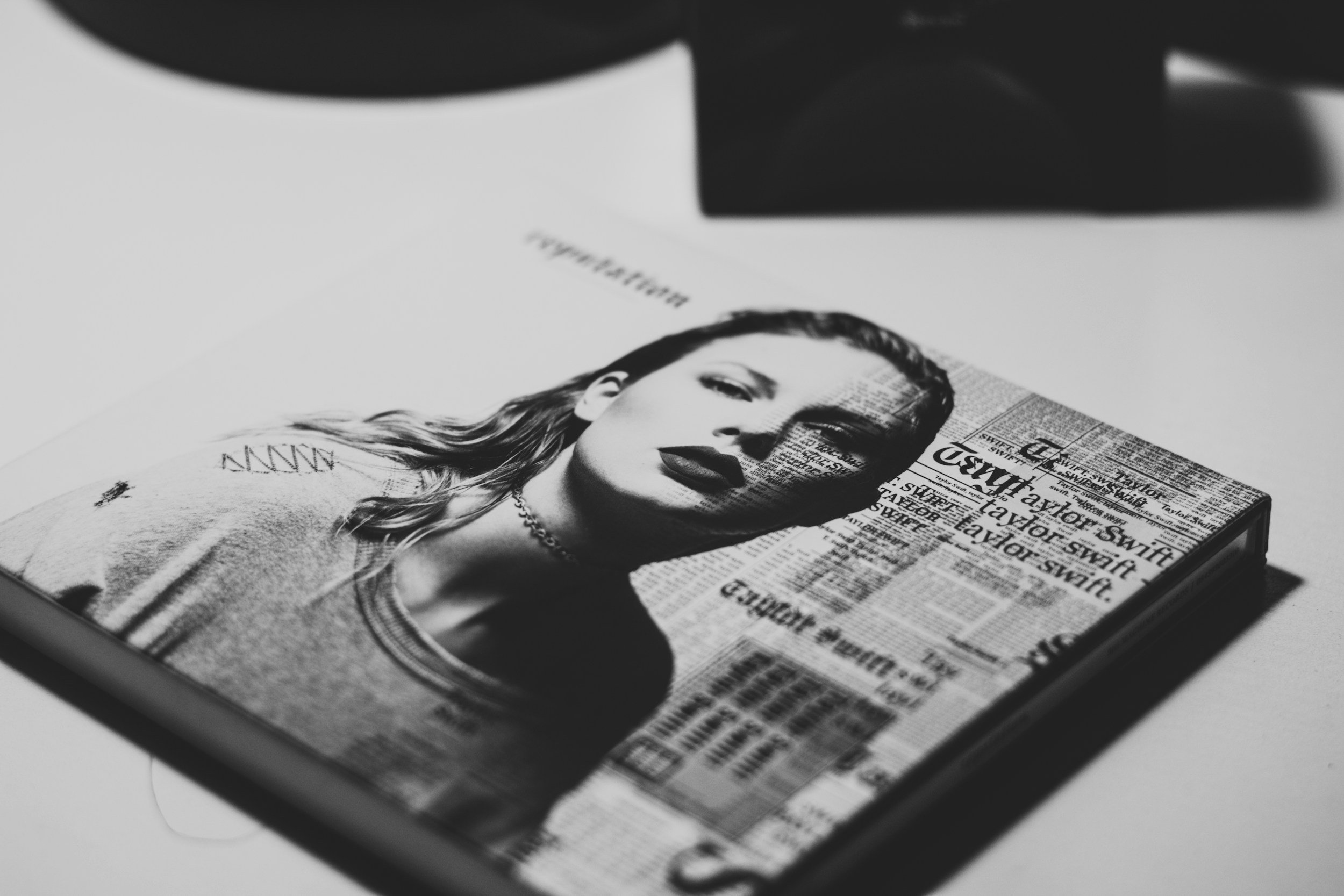
Imagine the day your name does the work for you.
Someone hears three seconds of your podcast and knows it's you. A client sees your face on a thumbnail and clicks before they've read a single word. Your voice, your look, your way of saying things: it's become a kind of signature. You built that. It took years. It's worth real money.
Now imagine waking up to find a version of "you" out there that you never made. A voice that sounds like yours, selling something you'd never endorse. A face that's yours, in a video you were never in.
That's not a hypothetical anymore. It's been the news.
In early 2024, AI-generated fake images of Taylor Swift spread across social platforms so fast that one site reportedly had to block searches for her name to stop the flood. The images were fakes: convincing, nonconsensual, and made by people she'd never met. The public backlash was immediate, and it pushed lawmakers in several states and in Congress to move faster on a question most of us never had to think about: who actually owns your face?
A few months later, the rapper Drake released a track that used an AI-generated version of the late Tupac Shakur's voice. Tupac's estate sent a cease-and-desist letter, and the track came down within days. Before that, in 2023, a song called "Heart on My Sleeve," built on AI imitations of Drake and The Weeknd, racked up millions of streams before the artists' label had it pulled.
Different stories, same root question. And the answer has a name lawyers have used since 1953: the right of publicity.
If you're building anything under your own name, whether that's a course, a studio, a practice, or a personal brand, this is one of the quietest, most valuable things you own. Most people don't know they have it until someone's already taken it.
Let's fix that.
What the "right of publicity" actually is
In plain English: the right of publicity is your right to control how your name, face, voice, and identity are used to make money.
It's the reason a company can't slap your photo on a billboard to sell mattresses without asking. It's the reason a brand can't hire a soundalike to fake your voice in an ad. It's a property right, which is the important part. Like a song or a building, it's something you own, something with value, and (depending on where you live) something you can license, protect, and even leave behind.
It tends to come up in four ways:
A company uses your face or photo without permission. Someone imitates your voice closely enough that people think it's you. A brand evokes your persona, your catchphrase, your look, your whole vibe, to cash in on who you are. Or, newest of all, someone uses AI to generate a fake "you" out of thin air.
The first three have decades of case law behind them. The fourth is being written right now.
The cases that built the rule
Here's the canon, told the way I'd explain it to a friend over coffee, not the way it reads in a textbook.
The human cannonball. In Zacchini v. Scripps-Howard Broadcasting Co. (433 U.S. 562, 1977), a performer whose entire act was being shot out of a cannon sued a TV station for broadcasting his full 15-second act on the news. The Supreme Court sided with him. It remains the only time the nation's highest court has ruled directly on the right of publicity, and the principle still holds: you have a real economic interest in your own performance and persona.
The voice you can't fake. In Midler v. Ford Motor Co. (849 F.2d 460, 9th Cir. 1988), Ford wanted Bette Midler's voice for a commercial. She said no. So they hired a backup singer to imitate her, well enough that listeners thought it was her. The court ruled that a distinctive, widely known voice is protected. You don't have to use someone's actual recording to violate their rights. You just have to deliberately copy the thing that makes them them. The same logic won the day for the gravel-voiced Tom Waits in Waits v. Frito-Lay, Inc. (978 F.2d 1093, 9th Cir. 1992).
The robot in the blonde wig. In White v. Samsung Electronics America, Inc. (971 F.2d 1395, 9th Cir. 1992), Samsung ran an ad with a robot wearing a blonde wig and a gown, turning letters on a game-show set. They never used Vanna White's name or face. Didn't matter. The court found that evoking her identity, the persona everyone recognized, was enough. You can be "used" without your photo or your name ever appearing.
Sit with that last one for a second, because it's the case that AI makes urgent. The law already says copying the idea of you can be enough. AI is a machine built to copy the idea of you.
There's a limit, of course. Free speech matters, and art matters. In Comedy III Productions, Inc. v. Gary Saderup, Inc. (25 Cal. 4th 387, 2001), California's high court drew the line with a "transformative use" test. Roughly: if a work adds enough new, creative meaning (real commentary, parody, art) rather than just trading on someone's fame, it may be protected. That's the balance courts are still trying to strike: protect the person, but don't let the right of publicity swallow journalism, satire, and genuine creativity.
Why AI changed the stakes overnight
For most of the last seventy years, copying someone's identity took money and skill. You needed a soundalike singer, a studio, a budget. That friction protected ordinary creators: the bar was just high enough that nobody bothered.
AI removed the friction. Now a stranger can clone a recognizable voice from a few minutes of audio, or generate a face from a handful of photos, in an afternoon, for free. The thing that used to happen only to A-list celebrities can now happen to a coach with 40,000 followers, a musician with a loyal niche, a consultant whose face is the business.
Lawmakers are scrambling to catch up.
In March 2024, Tennessee, home to a lot of working musicians, passed the ELVIS Act (Ensuring Likeness, Voice, and Image Security Act). It was one of the first laws written specifically to protect a person's voice from AI cloning, and it took effect July 1, 2024.
At the federal level, the NO FAKES Act has been introduced in Congress to create a nationwide right against unauthorized AI replicas of someone's voice and likeness. As of early 2026 it had not yet become law, and bills change, so if you're reading this later than the date of publication, that status may have moved. (Worth a quick search for the current version.)
And the platforms aren't waiting for legislators. As those AI music incidents showed, labels and rights holders are getting fakes pulled fast, sometimes within days. Speed is a tool, but it's a tool that works far better when you can prove what's yours.
The Texas piece most people miss
Here's where it gets close to home, and where the news stories quietly point to something you can act on.
Texas takes this seriously. Texas common law protects a living person's right of publicity. And the Texas Property Code (Chapter 26) protects a deceased person's name, voice, signature, photograph, and likeness as property that can be inherited and licensed, generally for up to 50 years after death, given its commercial value prior to transition.
Read that again, because it's the whole point of this essay: in Texas, your likeness, if it has commercial value at the time of transition, is treated as property. Not a vague feeling. Not a courtesy. An asset, one that doesn't disappear when you do, and one that can pass to the people you choose.
Which means your face, your voice, and your name belong on the same list as your house, your business, and your savings. They're things you own. And things you own get protected, organized, and passed on, or they get lost, fought over, and taken.
So what do you actually do?
You don't need to panic. You need to treat your identity like the asset it is.
A few quiet, practical moves. Keep clean records of your original content, the real recordings, the dated photos, the source files, because proving "this is genuinely me" is half the battle when a fake appears. Put your name and likeness rights in writing in your contracts, especially with collaborators, agencies, and anyone who films or records you. And here's the part almost everyone forgets: name what happens to your likeness in your estate plan, so that a thing the law already calls property actually goes where you want it to.
That's the bridge I keep coming back to in this work. The right of publicity isn't a celebrity problem. It's an ownership problem. And ownership, who holds it, how it's protected, and where it goes next, is the same question at the heart of every will, every trust, and every business succession plan I help people build.
Your face is yours. Your voice is yours. The law mostly agrees. The work is making sure your paperwork agrees too, before someone with a laptop decides otherwise.
If you've built something under your own name and you've never once thought about who owns it after you, that's not a failure. It just means you've been busy building. When you're ready, I'm happy to have a calm conversation about it, no pressure, no pitch. Just a clear look at what you own and how to keep it.
Source / citation list
Zacchini v. Scripps-Howard Broadcasting Co., 433 U.S. 562 (1977): the only U.S. Supreme Court right-of-publicity case.
Haelan Laboratories, Inc. v. Topps Chewing Gum, Inc., 202 F.2d 866 (2d Cir. 1953): origin of the term "right of publicity."
Midler v. Ford Motor Co., 849 F.2d 460 (9th Cir. 1988): protection of a distinctive voice.
Waits v. Frito-Lay, Inc., 978 F.2d 1093 (9th Cir. 1992): voice imitation.
White v. Samsung Electronics America, Inc., 971 F.2d 1395 (9th Cir. 1992): protection of persona/identity.
Comedy III Productions, Inc. v. Gary Saderup, Inc., 25 Cal. 4th 387 (2001): "transformative use" / First Amendment balance.
Texas Property Code, Chapter 26 (Tex. Prop. Code §§ 26.001 et seq.): descendible property right in a deceased individual's identity; right generally expires 50 years after death.
Tennessee ELVIS Act (Ensuring Likeness, Voice, and Image Security Act), amending Tenn. Code Ann. § 47-25-1101 et seq.; effective July 1, 2024.
NO FAKES Act: federal bill; verify current status before publishing.
News context (widely reported): AI-generated fake images of Taylor Swift circulating online (Jan. 2024); Drake's use of an AI Tupac Shakur voice and the estate's cease-and-desist (2024); the AI-generated "Heart on My Sleeve" track imitating Drake and The Weeknd (2023).
Disclaimer & Verification: Case citations are accurate to standard reporters as of the date of publication. Statute numbers and the NO FAKES Act's status can change, so confirm Chapter 26's current text, the ELVIS Act's code section, and the federal bill's status before publishing, especially if posting after early 2026. This article is general information, not legal advice, and reading it doesn't create an attorney-client relationship. Right-of-publicity law varies significantly from state to state. For guidance on your specific situation, talk with a licensed attorney in your state.