Fireworks, Marble, & the Washington’s 250th Birthday
There are cities you visit for their beauty, and there are cities you visit for their meaning, and only once in a great while do you find one that offers you both in the same afternoon, and in the year of its two hundred and fiftieth birthday Washington, DC is exactly that rare kind of place, a city that knows precisely what it is and has chosen, this year of all years, to throw open its doors.
As the United States marks its two hundred and fiftieth anniversary in 2026, the nation's capital settles into the very center of the commemorations, with special exhibitions and cultural programming and events threaded across the whole of the year, so that a traveler who arrives now is not simply seeing the city but seeing it at a particularly meaningful moment in its long life. And beyond the marble and the monuments, DC has gone on becoming a far more interesting place to be, with an expanding hotel scene, neighborhoods that hum with their own distinct character, and a food culture that has, somewhat to the surprise of people who still think of the city as all suits and no flavor, become one of the most exciting in the country. If you are planning travel for 2026, it deserves a place near the top of your list.
A city you can read like a constitution
Washington was not so much built as composed, laid out in 1791 by Pierre Charles L'Enfant on a grand baroque plan of long diagonal avenues and open vistas, so that the streets themselves seem to insist that everything important be visible from somewhere else, which is a rather optimistic thing for a government to design into its own floor plan.
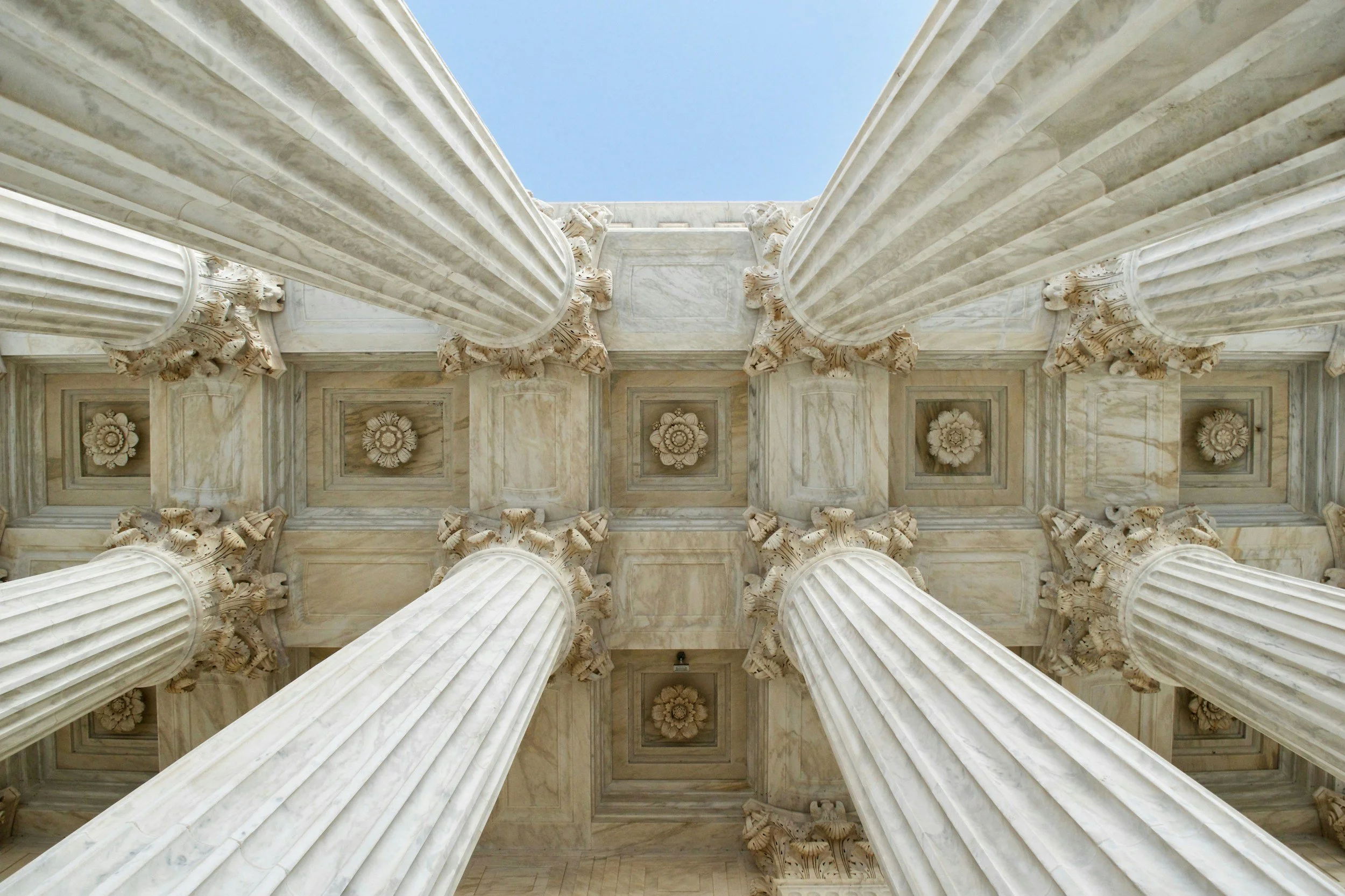
At its heart the city is the place where this country keeps its rules, the nerve center of the entire enterprise, the address to which law and order and a certain hard-won peace and a great deal of quiet daily productivity all eventually report. The genius of it is that the three great branches of government are not abstractions buried in a textbook but actual buildings you can walk up to and stand before, the White House for the executive, the Capitol with its great cast-iron dome for the legislature, and the Supreme Court, calm and templelike behind its tall columns, for the judiciary, with the words Equal Justice Under Law carved plainly above its entrance, as though someone wanted to be very sure no one inside forgot the assignment. To see all three within a single morning's walk is to understand, in your body rather than only your mind, how a republic is meant to hold itself together. For anyone who works in the law, as I do, it is genuinely moving. For everyone else, it is the best civics lesson money cannot buy.
It is worth knowing, too, that the people who live in this city of laws still cannot vote for a full member of the body that writes them, which is why their license plates read End Taxation Without Representation, a slogan that doubles as a daily protest. There is something very Washington about a city that argues with the federal government from its own bumper.
How to stand inside the branches
The loveliest part is how much of this you are actually welcome to enter, though each branch asks something a little different of you, so it pays to plan ahead.
A tour of the White House is free, but it is not spontaneous, and United States citizens generally request one through the office of their member of Congress, often many weeks in advance, while visitors from abroad arrange theirs through their embassy, and in every case the visit remains subject to availability and the security of the moment. The Capitol welcomes you through its Visitor Center, also at no cost, with tours you would do well to reserve in advance or to arrange through your representative's office. And the Supreme Court, which only moved into its own marble home in 1935 after spending well over a century borrowing rooms inside the Capitol, simply opens its doors to the public on weekdays, where, when the Court is in session, you may sit and listen to a portion of an oral argument, and when it is between terms you can still walk the building and hear a courtroom lecture about the work that happens there. Do confirm the current calendar and entry procedures before you go, since all of this shifts with the seasons and with security, but the underlying truth is a beautiful one, which is that the rooms where the rules are made and weighed and judged are, to a remarkable degree, open to the very people those rules belong to.
A city that gives away its treasures
Here is the fact that delights nearly everyone who learns it, which is that the great museums of the Smithsonian are free.
There is no admission to walk into the National Museum of Natural History, the National Museum of American History, the National Air and Space Museum, the National Museum of African American History and Culture, or the long row of others, and the National Zoo, which is itself part of the Smithsonian, is free as well, and the National Gallery of Art, with its astonishing collection, asks nothing of you at the door either. A few of the most visited buildings now use free timed-entry passes to keep the crowds civilized, and a handful of independent museums around the city, the kind devoted to spies or to particular passions of their own, do charge admission, so it is always worth checking each institution's official site for current hours and passes before you arrive. But the heart of it remains one of the most generous things any city offers anyone, which is a world-class education, freely given, to whoever walks in.
The Mall, the monuments, and the water
The National Mall is the long green spine of all of it, the stretch of lawn and water that runs from the Capitol to the Lincoln Memorial, lined with the monuments and memorials that have become the shorthand of the whole country.
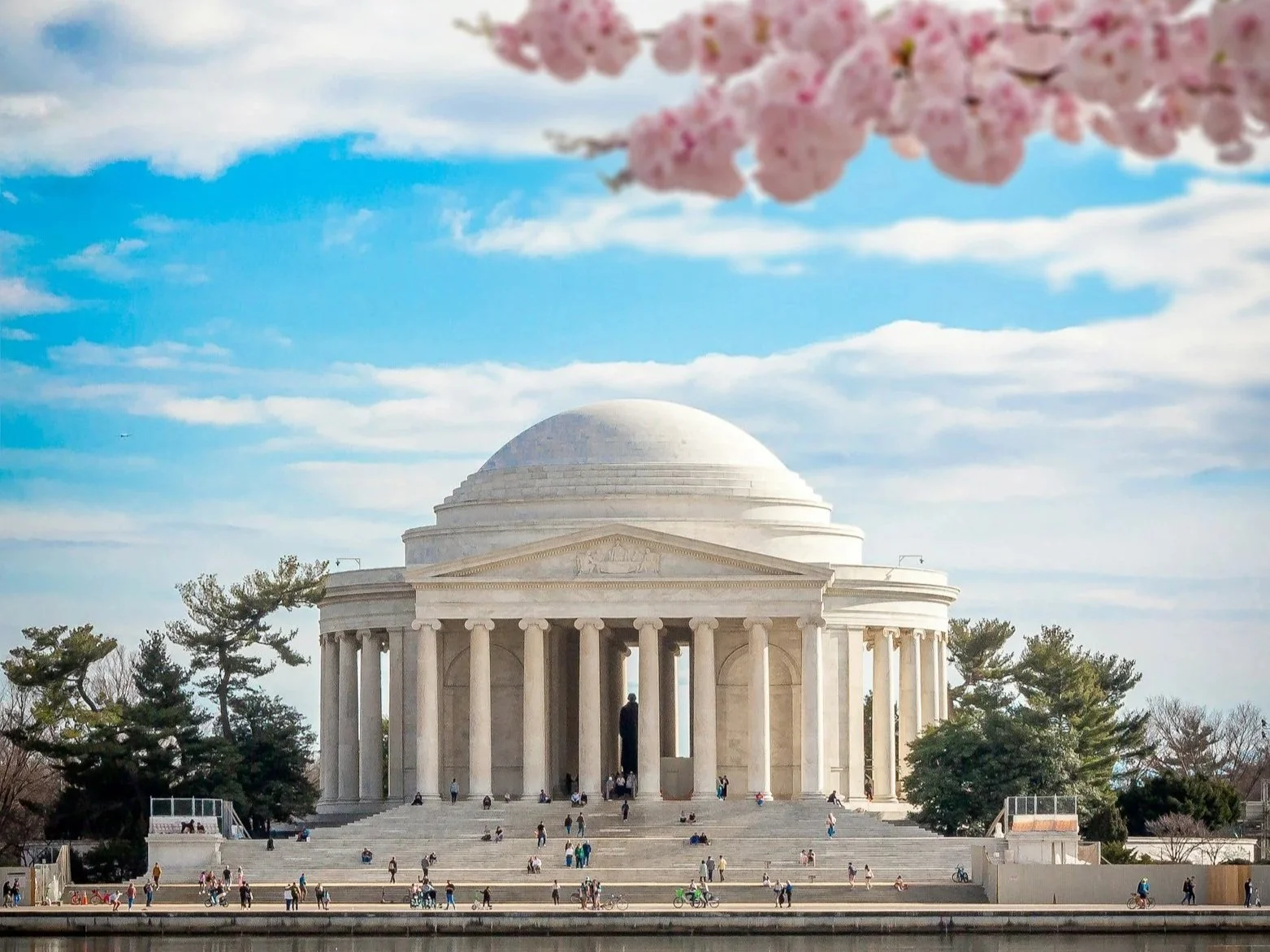
The city tends this ground carefully, all the more so ahead of the anniversary, and you may find maintenance or restoration work underway here and there as the Mall is readied for its moment, so it is worth checking the latest before you build an entire day around any single landmark. Time your visit for late March into early April and you may catch the cherry blossoms around the Tidal Basin, those trees a gift from the mayor of Tokyo back in 1912 and now the centerpiece of a brief and almost unbearably lovely week when the water's edge turns pink and the whole city seems to exhale, all of it gathered into the National Cherry Blossom Festival, though peak bloom keeps its own schedule and has never once promised a date to anyone. And if you come in early July, you arrive for the fireworks over the Mall on the Fourth, which in this particular year, the two hundred and fiftieth, will carry a weight and a brightness unlike any ordinary summer.

Where to eat, since you will be hungry between branches
It would be a mistake, and frankly a missed pleasure, to treat Washington as a city you only look at rather than one you sit down in, because its dining room has quietly become one of the best in the country.
For the full theater of it, there is Café Milano in Georgetown, the kind of room where the person at the next table is either a senator or doing a very good job of pretending not to be one, and Le Diplomate on Fourteenth Street, a French brasserie so convincingly Parisian and so reliably full of the city's well-dressed that getting a table feels like a small diplomatic victory of its own. Along the Georgetown waterfront, Fiola Mare sets out glamorous Italian seafood with the Potomac glittering just beyond the glass, while Rasika has spent years redefining what modern Indian cooking can be and collecting devoted regulars who order the crispy spinach chaat the moment they sit down. For the genuine occasion, the kind you plan a trip around, there is minibar by José Andrés, a tiny counter where dinner unfolds as a long and theatrical tasting menu, and for something older and more rumpled and entirely beloved, Old Ebbitt Grill near the White House has been shucking oysters for Washington since long before any current argument. End the night, if you can, at the Round Robin Bar inside the historic Willard, the hotel whose lobby gave us, so the story goes, the word lobbyist, when favor-seekers were said to corner President Grant over his evening cigar, though the honest etymologists insist the word is older than the legend, which is itself a very Washington sort of footnote. Reservations at the best of these book out well ahead, and the restaurant world turns over quickly, so do confirm the place is still standing and still taking your night before you build an evening around it.
Arriving, and slipping away by rail
One of the quiet pleasures of Washington is Union Station, a grand and beautiful gateway that also happens to be one of the best places in the country to step onto a train.
From its platforms the Northeast Corridor carries you up to Philadelphia in roughly two hours, and onward to New York and Boston beyond it, so that a morning in the capital and an afternoon at Independence Hall and the Liberty Bell is an entirely reasonable thing to plan. Trains run south as well, into Virginia and toward Richmond and Charlottesville and the coast at Norfolk, which makes the city a fine hub for a wider journey rather than only a single stop, and I would simply note that schedules and travel times change, so confirm the current timetable when you book.

Just beyond the city limits
Some of the finest days of a Washington trip are the ones you spend leaving it.
A short way down the Potomac in Virginia sits Mount Vernon, George Washington's own estate, where the house and the grounds tell the founding story in a far more human key than any monument can, and it is worth knowing that the estate charges admission and rewards a full unhurried afternoon. Cross into Maryland and you find the horse country and the long shimmer of the Chesapeake Bay, with sailing out of Annapolis, the trim little capital that is also home to the Naval Academy, and the famous blue crabs eaten with a mallet and a great deal of newspaper. Pennsylvania's Amish country, around Lancaster, is an easy drive for a slower kind of day, the Atlantic beaches of Delaware, Maryland, and Virginia are within reach for the summer traveler, and to the west the Blue Ridge and the Shenandoah lift up into the mountains, where, near Charlottesville and the Jefferson country around Monticello, you will even find a Trump-branded winery among the vineyards in the foothills, should that be of interest to you. And if you are the sort to plan a whole journey around a single meal, point the car toward the little town of Washington, Virginia, where The Inn at Little Washington has been quietly earning three Michelin stars and serving what may be the most romantic dinner within a tank of gas from the capital.
A visit to the one agency you already know
Which brings us, with a certain inevitability, to the Internal Revenue Service.
You cannot exactly tour it, which is probably for the best on both sides, but its headquarters does sit right there on Constitution Avenue, the one federal agency with which every American already has a standing relationship, whether or not the feeling is mutual. Pause on the sidewalk and you will find, carved into the stone, a line from Justice Oliver Wendell Holmes Jr., taxes are what we pay for a civilized society, which is either a noble sentiment or a very expensive one depending on the month you happen to be reading it. I find it a fitting place to stand, because it is where the travel writer in me hands the microphone back to the lawyer.
If part of your journey to Washington is genuine business, a conference or a continuing education program or a real client meeting, then a portion of your travel may be deductible, and I want to be very clear about how that actually works, because it is a real rule and never a loophole. The trip's primary purpose has to be true business, and every bit of it has to be properly substantiated, which means keeping your receipts, recording which days were working days and which were not, and being honest with yourself about the difference. The afternoon you spend beneath the cherry blossoms does not become a business expense simply because you flew in for a conference, the oysters at Old Ebbitt do not deduct themselves, and the line between work and pleasure matters a great deal to the people who eventually read your return. So enjoy the city wholeheartedly, let the personal parts be entirely personal, and then sit down with a CPA who can tell you, against your actual facts, what genuinely counts. That is not the small print of a good trip. It is part of taking your own work seriously. Justice Holmes would, I suspect, approve.
Come see where the rules are kept
Washington in 2026 is a chance to stand inside the working machinery of the country at the very moment it pauses to mark two hundred and fifty years, and whether you go for the monuments or the museums or the oysters or simply the strange civic comfort of seeing all three branches in one long walk, it will give you something to carry home.
And if any of it raises a question closer to your own life, about your travel and your work, about protecting what you are building while you are on the road, or about the rules that quietly govern the journeys you take . . . we would love to talk with you more.
This piece is general information, not legal or tax advice, and it does not create an attorney-client relationship. Travel, dining, tax, and admission details change frequently, and tax deductions in particular depend entirely on your specific facts. Please confirm current details with each institution and restaurant and speak with a qualified attorney and a CPA before relying on anything here.