After the Fairytale: The Wilderness, the Border, and the Paperwork Between
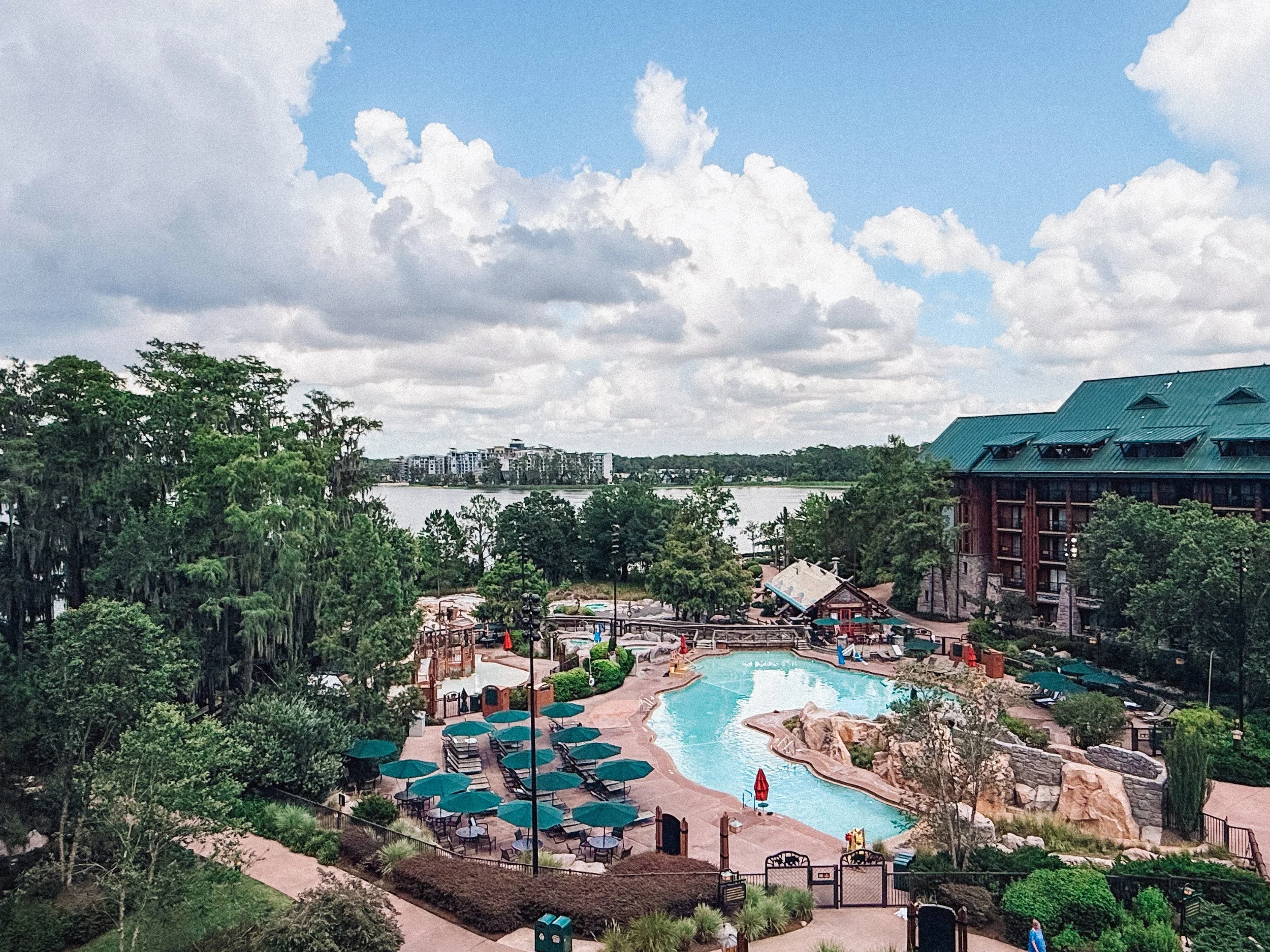
We came home from Disney a few days ago, and I am still finding pixie dust in the laundry, still hearing the low woodsmoke hum of the Wilderness Lodge lobby somewhere behind my ears, the way a song follows you out of a theater and refuses, sweetly, to let you go.
We stayed one night at Disney’s Wilderness Lodge, that great timbered cathedral of a hotel built to echo the grand old lodges of the Pacific Northwest, all totem poles and river stone and pine beams rising seven stories toward a ceiling that seems to remember mountains it has never seen. Across the water, the new Lakeshore Lodge is rising out of the shoreline, scaffolded and half dreamed, and if you stand at the edge of the lake in the early evening you can hold both of them in one gaze . . . one home finished and warm and full of children’s voices, one home still becoming, still all promise and framing and open sky. Mothers know that view. We live inside it. We are always standing between the house we have built and the one still taking shape, and we love them both without needing them to be finished.
The children met the characters. I met my inner child, who is doing beautifully, thank you for asking, and who has already requested that we go back.
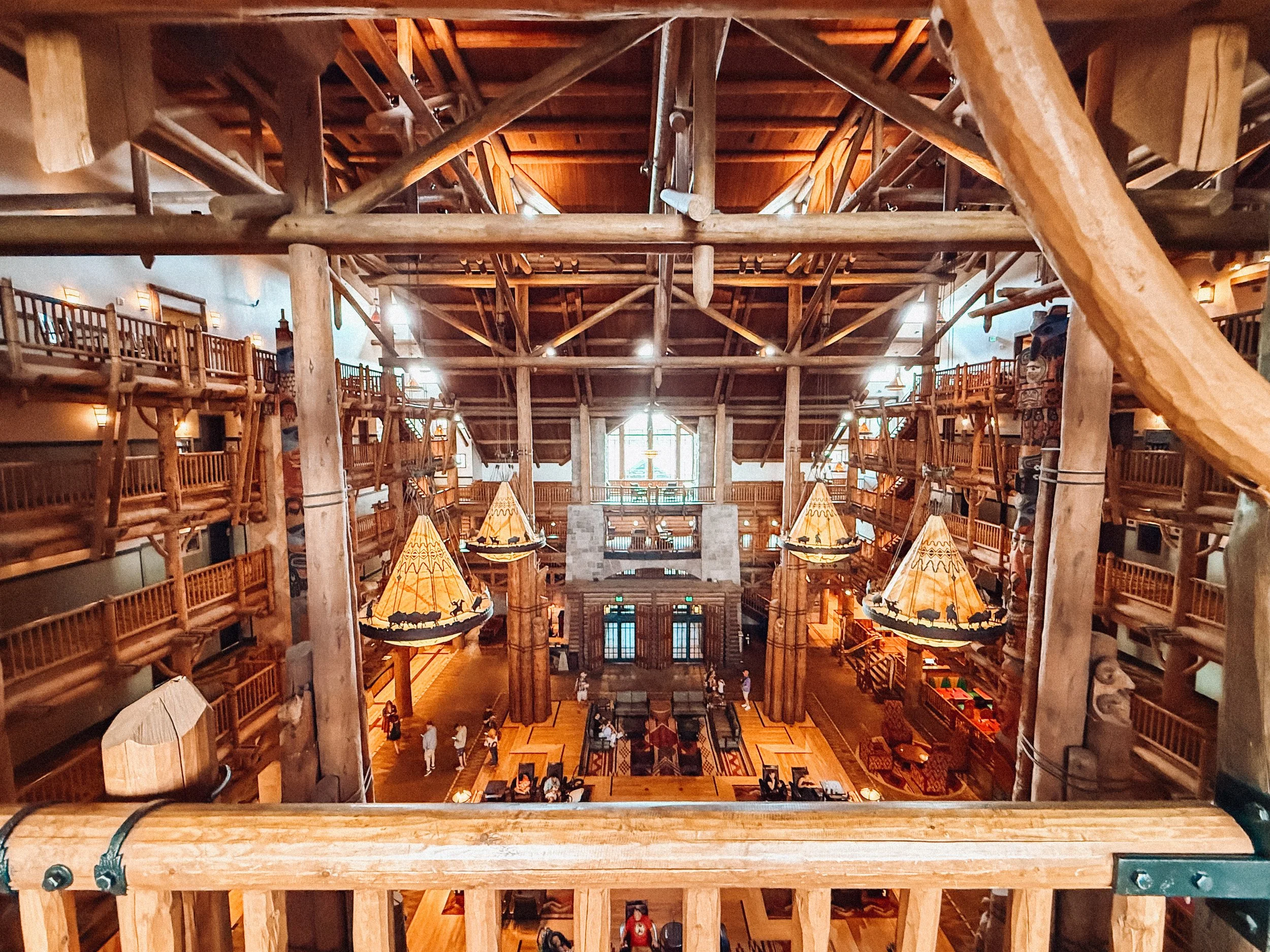
But the moment that followed me home was smaller and stranger than any parade. We had booked the Snow White character dining at the lodge, and somewhere between the enchanted apples and the second bread service it occurred to me how wonderfully mismatched the whole evening was. Snow White is a German fairytale, born of the Brothers Grimm and the dark hush of the Black Forest, a story that smells of cold stone and old orchards. And there she was, gliding table to table in a dining room built to honor the forests and ranges of the American and Canadian West, a European story wrapped in a Pacific Northwest room, served to a Texas family beside a Florida lake. Four geographies stacked on a single dinner plate, and not one of them apologizing to the others.
I loved it. This is what travel does, even the themed and manicured kind. It layers worlds on top of one another until you lose track of whose story you are standing in, and in the losing, something in you widens.
And because my mind works the way my mind works, that lodge full of borrowed wilderness sent me straight to the real one. I came back to Texas, unpacked the ears and the sunscreen, and pulled out my own Canadian Wilderness Travel Guide, the one I made for the families I plan trips for, because if a themed hotel can leave me aching for mountains I have not yet met, then it is time to plan the trip that introduces us. And here I should tell you, if you are new here, that I wear two hats in this house. One is the lawyer’s. The other is the travel advisor’s, because through my Fora travel practice I plan and book trips like this one for families like yours, which means the rest of this post is going to give you both . . . the wilderness and the paperwork, the daydream and the documents. They were never really separate anyway.

(And the third hat, the mama hat, gets its own room entirely. I write about the motherhood side of all this . . . the trip itself, the meltdowns and the magic, the holy exhaustion of it . . . inside my community Mama Summer Camp at www.skool.com/msc.)
The Real Wilderness: From My Canadian Wilderness Travel Guide
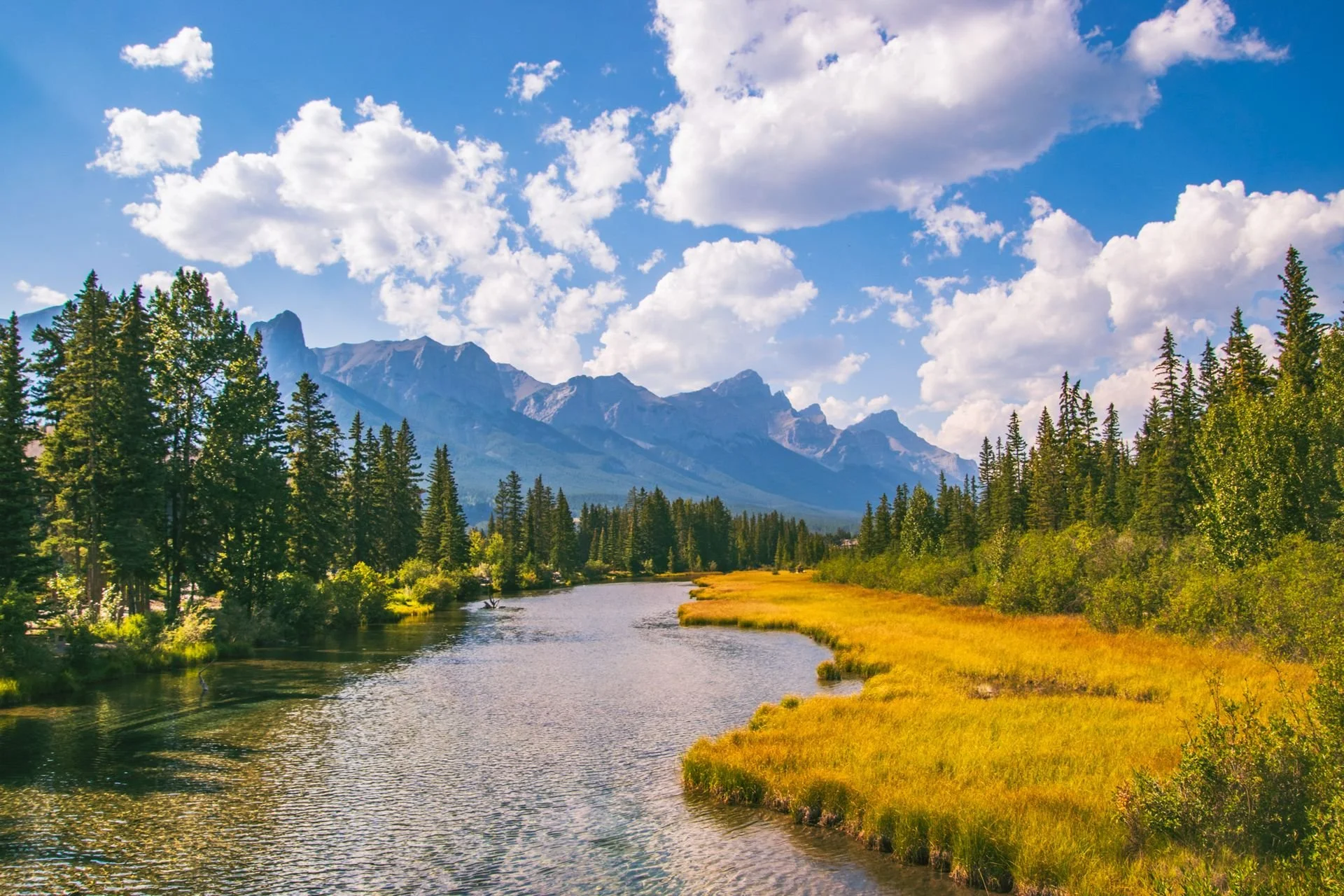
Here is what the lodge only gestures toward.
A Canadian wilderness trip runs on northern skies, the sound of a river, and a pace that recalibrates the soul. British Columbia and the Rockies hold the country’s most recognizable landscapes, the glacier-carved peaks of Banff and Jasper and the old-growth rainforests of the Pacific coast, but the wilderness keeps going long after the postcards stop . . . the boreal forests of the central north, the tidal coastlines of the Maritimes, the Arctic opening into something vast and elemental at the top of the map.
The properties up there range from legendary backcountry lodges reachable only by floatplane to grand national park hotels with mountains framed in every window, and what they share is a rhythm: slow mornings spent learning the land, wildlife encountered on its own terms, and a scale that quiets whatever you brought with you.
When people ask me where to begin, I hand them my guide, and I will hand you its heart right here. Three stays live at the top of it, one for each kind of wanderer your family might hold.
For the seekers of true seclusion, there is Clayoquot Wilderness Lodge, a remote all-inclusive camp on Vancouver Island’s wild west coast, reachable only by floatplane or boat, where the tents are safari-style and luxurious and the rainforest presses right up to the canvas.
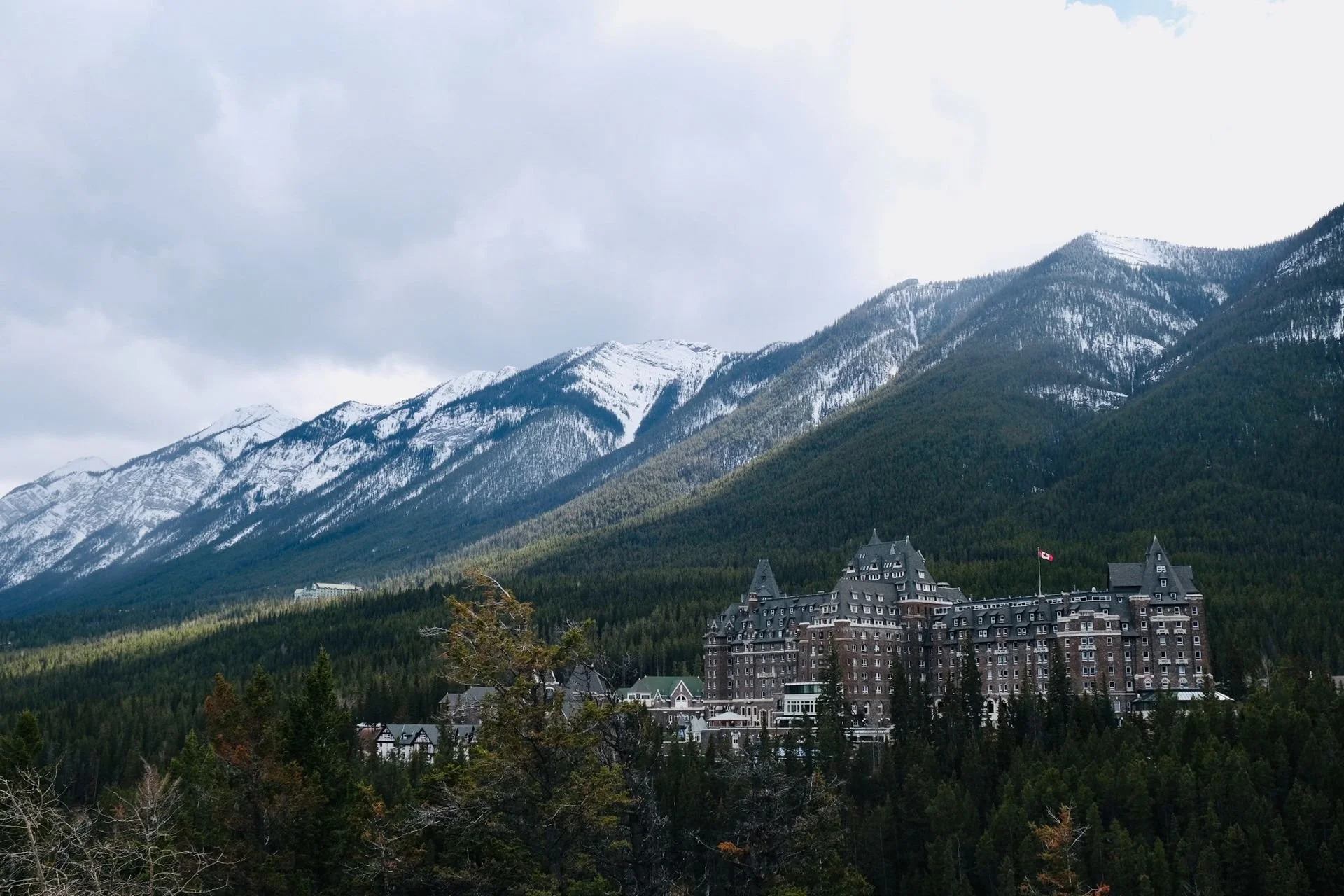
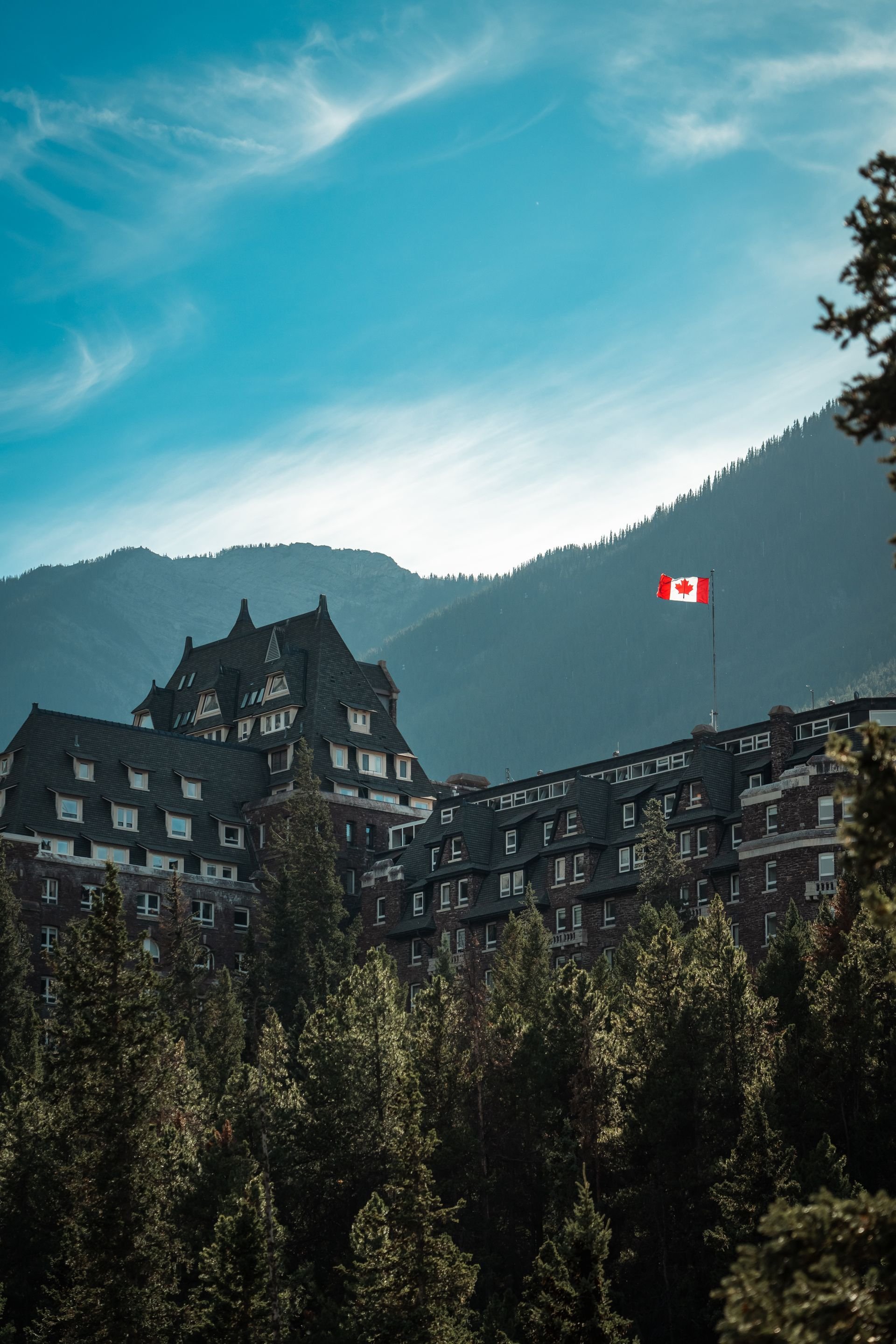
For the lovers of the grand and the iconic, there is the Fairmont Chateau Lake Louise, the alpine hotel standing at the edge of one of the most photographed lakes on earth, earning its legend in every season, in every light . . . and, not coincidentally, belonging to the very family of great railway lodges the Disney version borrows its soul from, along with its castle-in-the-mountains sister at Banff Springs and the low-slung cabin ease of the Jasper Park Lodge. Stand in one of those lobbies and you will recognize the timber and the stone hearths immediately, except here the mountains through the windows are real, and the elk on the lawn did not clock in for a shift.
And for the family that wants its travel to mean something beyond itself, there is the Fogo Island Inn in Newfoundland, a striking architectural retreat on a rocky Atlantic coastline where every stay pours directly back into the local community through the Shorefast Foundation . . . proof, if your children ever ask, that a beautiful trip can also be a generous one.
Then there is the doing, and my guide keeps two experiences pinned at the top of that list as well.
The first is the water: hop in a kayak with an expert guide and paddle the outer shores of Vancouver Island, where orcas surface and sea otters float on their backs and the ancient rainforest leans out over the tide, the kind of morning your children will narrate at dinner tables for the rest of their lives.
The second is the line and the current: fly fishing for wild salmon and trout draws anglers all summer long, and when the lakes freeze over, ice fishing becomes its own quiet ritual, a little house on the ice and a great deal of patient hoping.
Beyond those, the country keeps offering.
If your family is drawn to the Rockies, the classic shape of the trip is a day or two in Calgary, then the drive into the parks, where the Icefields Parkway threads a hundred and forty three miles of glaciers and turquoise lakes between Banff and Jasper and earns its reputation as one of the most scenic drives on the continent, with Lake Louise and Moraine Lake as improbable in person as they are in photographs.
If your family leans east, eastern Canada is wilder in some ways, quieter in others, and far less visited than it deserves . . . the Cabot Trail curling around the Nova Scotia coast, the fjords and cliffs of Gros Morne, Montreal and Québec City as cobblestoned bookends, so that one trip gives your children both the wilderness and a little of Europe without ever crossing an ocean.
There is even a version of this trip that floats: expedition sailings through the Inside Passage among whales and glacier-carved fjords, autumn cruises through the Maritimes when the foliage catches fire, and, for the boldest calendars, the Northwest Passage itself in the narrow ice-free window of high summer.
A few practical truths I share with every family I plan for, offered here in the same spirit.
Summer, June through August, is the season of long daylight and open trails, while September brings quieter paths and extraordinary color; three to four days inside a park is the right amount of time to actually settle, with a city on either end to round the trip.
A rental car is almost always the right call, because the distances are honest and the landscape asks for flexibility.
Pack in layers . . . a wicking base, a warm middle, a waterproof shell, and broken-in boots, because mountain weather changes its mind by the hour and evenings at a lodge never ask for anything fancier than flannel and down.
Expect no cell service outside the towns, so download your maps before you leave one, and know that the parks require passes and, increasingly, reservations, that the glacial streams are lovelier to look at than to drink from, and that the wildlife . . . the elk, the wolves, the bears your children will be hoping for . . . is best met with a guide and a respectful distance.
And eat everything: the wood-fired game and the wild salmon, the bannock with its deep Indigenous roots, the Saskatoon berry pie, the poutine, the maple taffy rolled in snow if the season allows it. These lands were shaped and stewarded by Indigenous nations . . . the Cree, the Anishinaabe, the Blackfoot among them . . . long before Banff became Canada’s first national park in 1885, and the best trips up there are the ones that travel with that knowledge held gently in hand.
The full guide goes further than this post can . . . more stays, more seasons, more of the small knowing details that make a trip feel effortless . . . and it is yours for the asking. Send me a message and I will send it along. Because before any of it . . . before the floatplane and the turquoise lake and the flannel evenings . . . comes the part of the trip that never appears in the brochure.
Which brings me, as it always does, to the paperwork.
Traveling to Canada With Kids: The Border Is Real, Even When the Neighbor Is Familiar
Canada feels like the next room over. Same continent, familiar storefronts, a border you could drive across before lunch if the children cooperated and the snacks held out. But legally it is another country in every way that matters, and the family that treats the crossing casually is the family that ends up sorting out its story at a border booth instead of a campfire. The wilderness rewards the prepared. So does the border officer, who has never met you, who does not know that you are wonderful, and who is entitled, on behalf of every child who passes through that station, to ask you to prove that your family is exactly what it appears to be.
So before anyone in your household crosses a border, even a friendly one, a few things are worth settling on a quiet day at home.
Begin with the passports, and begin with everyone’s, because every member of your family needs their own to fly internationally, the six-week-old included, and there is no photograph in the world more absurd or more precious than an infant’s passport photo.
Children’s passports are typically valid for a shorter window than adult passports, which means the little blue book that carried your daughter to the beach two summers ago may have quietly expired while you were busy raising her. Check the dates on a calm evening with a cup of something warm, not in the fluorescent panic of the week before departure. And know that applying for a child’s passport generally involves both parents, in person or in writing, which takes coordination, which is one more reason to do it in an unhurried season, when coordination is a phone call and not a crisis.
Then consider who is traveling with whom, because if your child crosses a border with one parent, a grandmother, an aunt, or anyone who is not both legal guardians, the officer at the crossing may ask for evidence that the absent parent said yes. A signed consent letter, ideally notarized, answers that question before it is ever asked.
Canada in particular is known for taking children’s cross-border travel seriously, and truthfully, this is exactly what you want a country to do . . . you simply want to be the family that arrived prepared for the asking. If your family carries custody orders, guardianship papers, or the beautiful complicated architecture of a blended household, those documents travel with you whether you pack them or not, so pack them. The paper introduces you when your word alone cannot.
And then, the part almost everyone skips, the part I will keep saying for as long as I practice law: the powers of attorney. When you leave the country, someone at home should hold a durable power of attorney, so that the business, the bank, and the house do not freeze the moment you slip out of reach, and a medical power of attorney should exist somewhere findable, naming the person who speaks for you if you cannot speak for yourself.
These are not morbid documents. They are the legal equivalent of leaving a light on. And if the trip is grown-ups only and grandma is holding down the fort, remember that she typically cannot authorize medical care for your children without a signed consent in her hand, which means ten minutes of paperwork buys her the authority to act in an urgent moment and buys you a vacation where the phone can finally stay in the bag. This matters doubly in a place where the phone may have no bars at all, because the same backcountry that asks you to download your maps in advance is asking you, in its own way, to download your family’s authority in advance too. Where there is no signal, the signed page speaks for you.
Last, and least glamorous, and most often the thing that saves the day: copies. Photograph every passport, every letter, every order. Keep a set in the cloud, a set with a trusted person at home, and a paper set folded somewhere separate from the originals, because a document is only as useful as your ability to produce it, and the wilderness, whether Canadian or bureaucratic, does not wait while you search. While you are at it, pack the unglamorous kit the guidebooks whisper about . . . the prescriptions filled before you leave, since a gas station shelf may be the only pharmacy for a hundred miles, and the travel insurance and medical coverage details reviewed, since your plan from home may treat that friendly border as seriously as the law does.
Want to Make Future and Reoccurring Travel Easier? Family Office Principles for Every Income: The House Behind the Household
Here is where the fairytale, the floatplane, and the paperwork finally sit down at the same table.
Many of the ultra wealthy have a thing called a family office, a private team of advisors and administrators who manage the family’s assets, documents, travel, education, philanthropy, and legacy, all under one roof, all pointed toward the same written intentions.
Said aloud, it sounds impossibly grand, a thing with marble floors. But strip away the marble and a family office is only a set of principles, and principles, unlike marble, scale down beautifully to any income, any kitchen table, any life. Notice, too, what sits on that list right alongside the assets and the estate: travel.
The families who run their lives this way treat a trip not as an escape from the household but as an operation of it, planned with the same intention as anything else they build, which is precisely why the lawyer and the travel advisor in me refuse to be separated.
You do not need a staff to run your family like it matters. You need one place where everything lives . . . a binder, a fireproof box, a well organized drive . . . where the passports and wills and powers of attorney and insurance policies and consent letters and guardianship nominations all keep house together, because when a family’s papers have a home, the family has a spine.
You need a rhythm of review, and where the ultra wealthy convene quarterly with their advisors, you can convene annually at your own table, once a year, looking honestly at what changed . . . a new baby, a new business, a move, a marriage, a loss . . . and letting the documents catch up to the life, since a document that no longer describes your family is only a souvenir of who you used to be.
And you need your intentions written down, because a family office was never really about the money. It is about deciding, on purpose and in advance, what this family is for, and then letting that decision quietly direct the smaller choices, where you travel, what you build, who holds the keys when you cannot. That is intention setting at the highest level, and it costs nothing but an honest conversation and the courage to write down the answers.
This is what we practice inside our own family, at our own scale, and it is the quiet heart of how I practice law for yours. Home is the first business. The estate plan, the powers of attorney, the tidy drawer of documents . . . these are not chores bolted onto the side of a life.
They are the internal systems of the household, the same way an operating agreement is the internal system of a company, and the family that builds its inner systems first builds everything outward from there on steadier ground. It is a lifestyle more than a transaction, a way of being more than a to-do list, and like all good lifestyles it begins not with a purchase but with a decision.
Before You Board Again
Snow White wandered into a strange house in a strange forest and trusted it to hold her, and in the story, it did. In real life, we prepare the house before we wander, and then we wander further, and lighter, and with both hands free for the children . . . all the way, perhaps, to a turquoise lake beneath a real timber lodge, where the only fairytale in the room is the one your family is writing.
If a trip like that is stirring in you, I can help with all of it. My full Canadian Wilderness Travel Guide is yours in exchange for a message . . . the lodges and the drives and the floatplane if you are feeling brave, matched to your family and your season. And through my law practice I can help you gather the documents that let you travel light and rest easy . . . the passports coordinated, the consents signed, the powers of attorney standing watch at home. I would love to have a calm conversation about any of it. No urgency, no pitch. Just a plan, drawn on a quiet day.
You can message me with a time that suits you.
And if it is the motherhood of it all you want to talk about, the character dining and the courage and the laundry that still glitters faintly, come find me in Mama Summer Camp at www.skool.com/msc.
This post is general information, not legal advice, and reading it does not create an attorney-client relationship. Passport, border, and consent requirements change and vary by destination and circumstance; confirm current requirements with the U.S. Department of State and the destination country before you travel. Travel details, park requirements, and property offerings change seasonally; confirm current conditions before booking. For guidance on your own family’s situation, please consult an attorney licensed in your state.